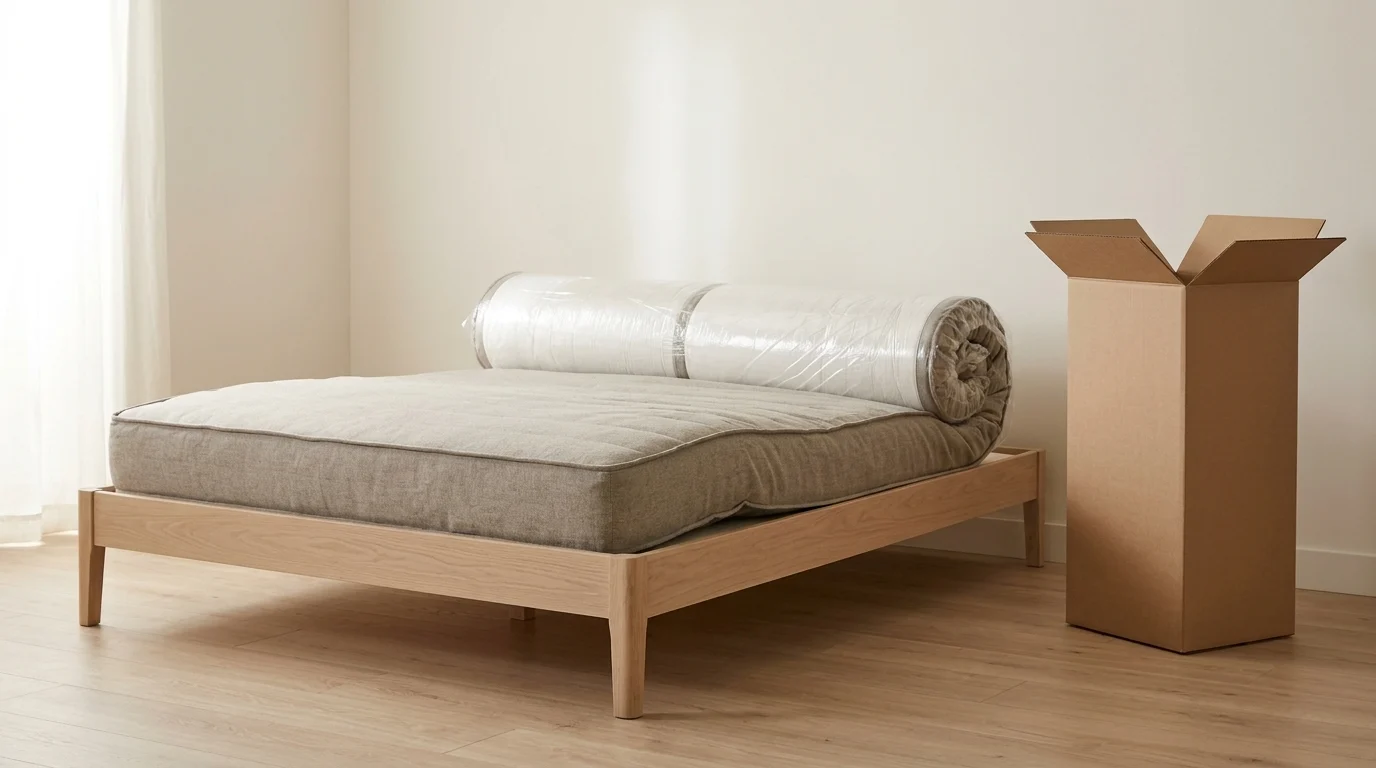
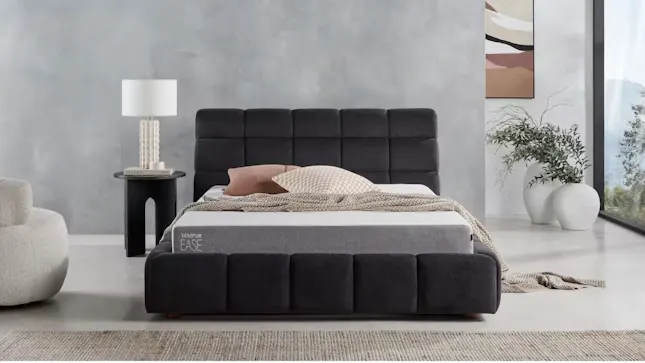
An all-foam mattress has no springs at all: layers of foam do the comfort and the support. That makes it quiet, good at keeping one sleeper's movement from reaching the other, and easy to deliver in a box. It also makes it warmer than a spring mattress, and softer at the edge. Whether that trade suits you is most of the decision.
Memory foam, or just foam?
"Memory foam" is viscoelastic foam: it softens with warmth and pressure and moulds slowly around you, then takes a moment to recover when you move. Other foams — the polyurethane support foams under almost every comfort layer, and the branded foams many companies use on top — respond faster and feel springier. Plenty of people searching for a memory foam mattress really want an all-foam mattress, so this page covers both, and says which is which:
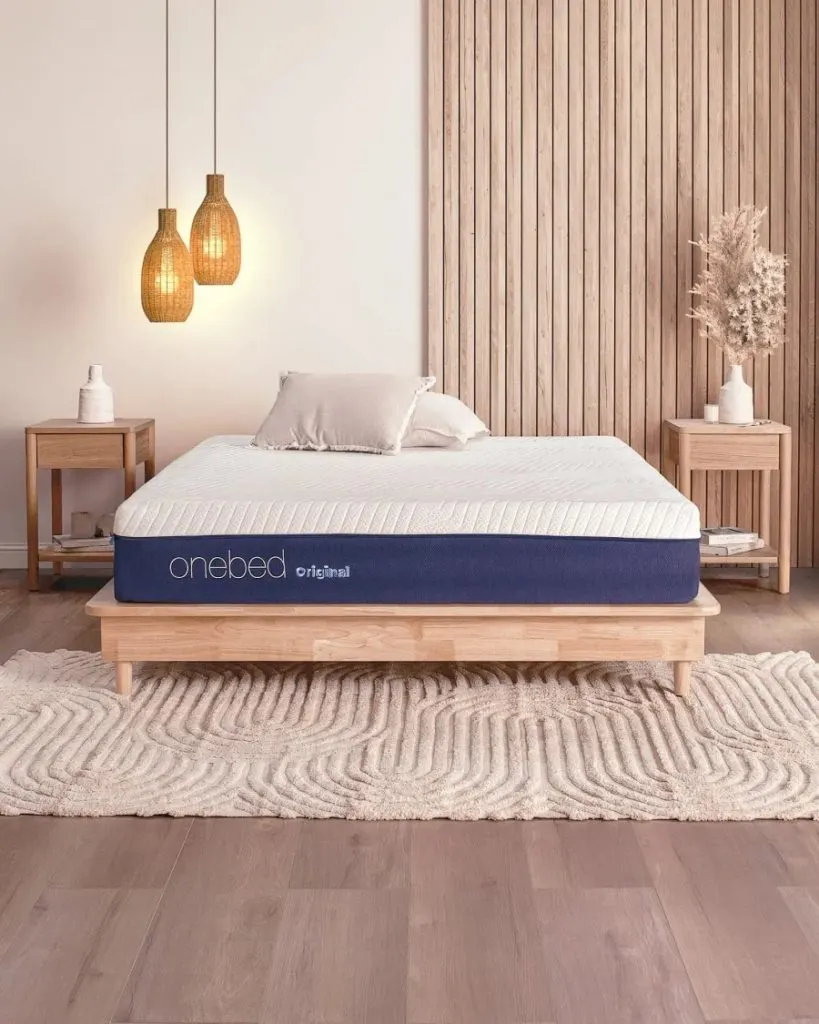
- Onebed Original 11 — gel-infused memory foam over a layer of Onebed's Auralux foam and a five-zone high-density support base.
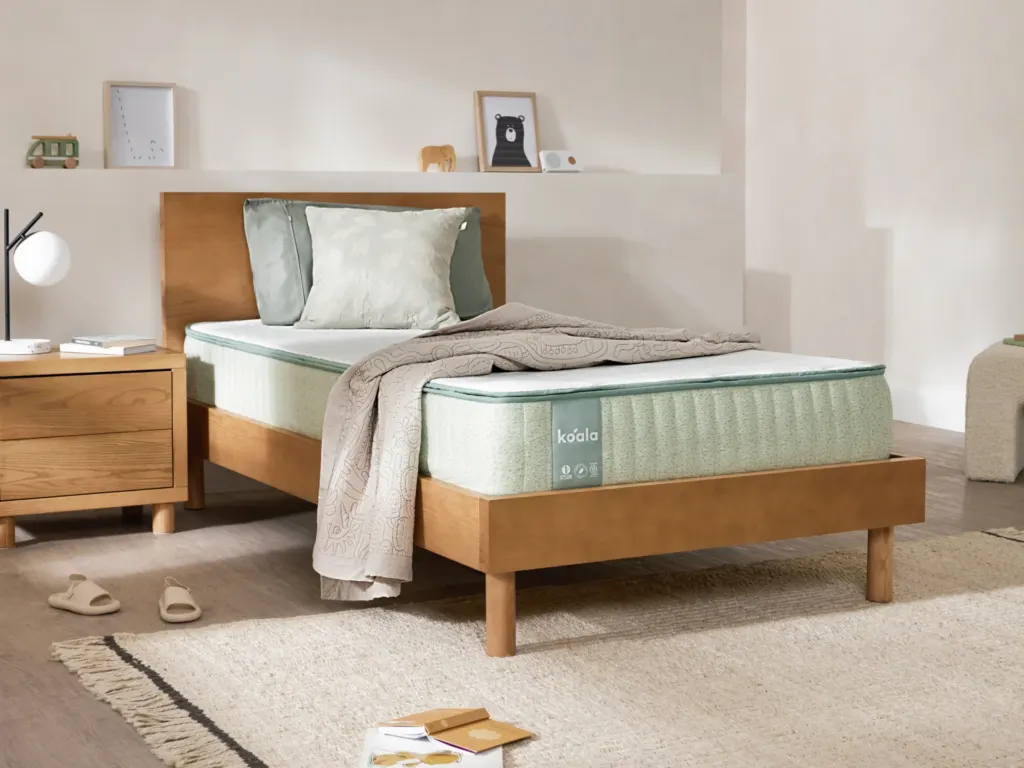
- Koala Mattress — Koala's own Kloudcell comfort foam over a three-zone high-density support foam. Koala describes the mattress as all-foam rather than memory foam.
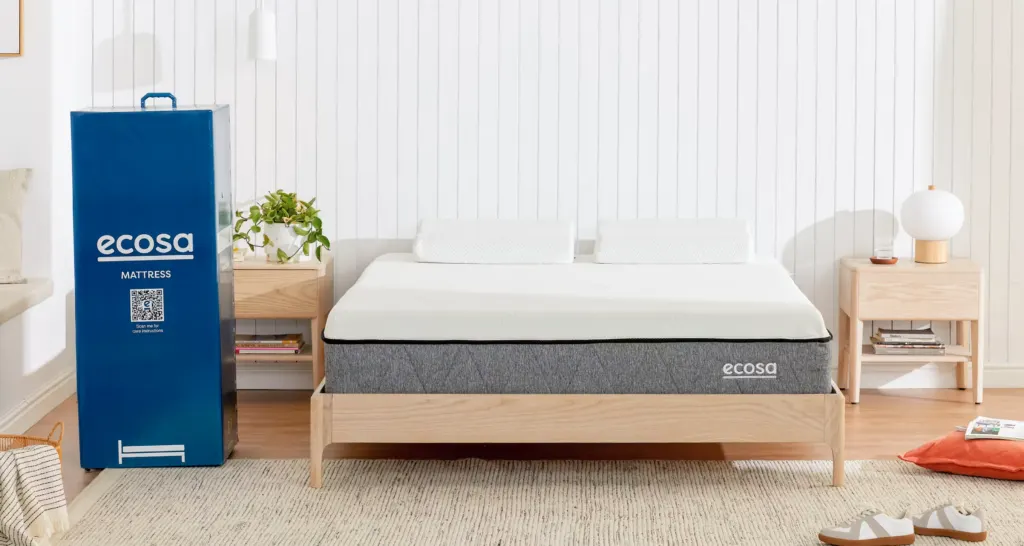
- Ecosa Mattress — three foam layers built around Ecosa's G-7 memory foam, inside a zip-off cover with a woven silica fire barrier.
- TEMPUR Ease 20 Medium — TEMPUR's own Adapt material, a viscoelastic foam, over a DuraBase support layer. The Ease is the least expensive way into TEMPUR's material.
What foam does well
Stopping movement from crossing the bed
With no spring core to carry a bounce from one side to the other, foam absorbs movement close to where it happens. If you share a bed with someone who turns over a lot, or gets up early, this is the strongest argument for foam. You can compare the motion-isolation scores in the table above.
Pressure relief
Foam spreads your weight across a wider area, which is why side sleepers in particular often like it at the shoulders and hips. Memory foam does this most slowly and most closely; faster foams do it with more push-back. Neither is better in general — it depends on whether you like to feel held in place or to move freely.
Quiet
Foam does not creak. If you are sensitive to noise, or the bed is in a shared space, that matters more than it sounds.
What foam gives up
Heat
This is the main cost. Dense foam is in close contact with your body and has no open core underneath for air to move through, so it holds more warmth than a spring mattress. Our own reviews say so plainly: the Koala "runs warmer than a spring hybrid", the Ecosa "sleeps warm", and the Onebed has "no spring layer for edge support or airflow". Cooling covers and gel infusions help at the surface, but they do not change what is underneath. If you sleep hot, look at our cooling ranking before you choose foam.
The edge
Without perimeter springs, the edge of an all-foam mattress compresses more when you sit on it, and the usable width of the bed is a little narrower. If you sit on the side of the bed to dress, or share a queen, check the edge-support score on each review.
Changing the feel without a return
Firmness is the most common reason a mattress goes back. Koala, Ecosa and Onebed give you a way to change it at home; the TEMPUR does not:
- Koala flips: one side is medium-firm, the other firm, about 7 out of 10 on Koala's scale.
- Ecosa unzips: reorder the three foam layers and the feel changes. The Original and Plush editions cost the same, so choosing between them is free.
- Onebed has two settings, medium and medium-firm — so committed firm sleepers should look elsewhere.
- TEMPUR Ease 20 comes in one feel, medium. TEMPUR's PRO range offers other feels, at roughly twice the price.
Trial and warranty
Because foam mattresses arrive compressed and cannot be re-boxed, the trial terms decide how much risk you are taking on:
- Onebed gives 125 nights with no minimum stay — you can return it in the first week — and collects it for free.
- Koala gives 120 nights with free returns.
- Ecosa gives 100 nights.
- TEMPUR offers no sleep trial at all. You buy it through retailers, so the showroom floor is your only test — try it there first.
On warranties, Ecosa carries 15 years; Onebed and Koala carry 10; TEMPUR carries 10 years on a full-replacement basis. As with any warranty, the conditions — what counts as sagging, and what voids cover — matter more than the number of years.
Height and handling
The Onebed is 28 cm deep, the Koala and Ecosa 25 cm, and the TEMPUR Ease 20 cm — a shallow build that sits noticeably lower on a bed base. A queen TEMPUR Ease weighs about 25.8 kg, light enough for two people to carry up stairs. Allow a day or two for a boxed mattress to reach full height before you judge the feel.
Foam or hybrid?
Choose foam if movement and noise bother you more than heat. Choose a pocket-spring hybrid if you sleep hot, want a firmer edge, or prefer a surface that is easier to move on. If you cannot decide, the adjustable foams above — Koala, Ecosa and Onebed — reduce the cost of guessing wrong.
How this list is ordered
The mattresses are ranked by their overall score — the same score each carries on our Top Rated list, set against the same ten criteria as everything else on the site. The label on each card describes something about the mattress itself, not a separate award. How We Rate explains how the scores are set.
We have not slept on these mattresses. Everything here comes from what each brand publishes about its Australian product, warranty and trial — confirm the price and terms on the brand's own page before you buy.