At the top of the market you are paying for materials, construction time and the service around the sale. What you are not paying for is a guarantee that it suits you — price and personal fit are unrelated, and an expensive mattress that is the wrong firmness is still the wrong mattress.
What the money actually buys
- Natural fill. Wool, cashmere, silk and horsehair in the comfort layers. Wool in particular regulates temperature and moisture better than synthetic wadding, and it is expensive.
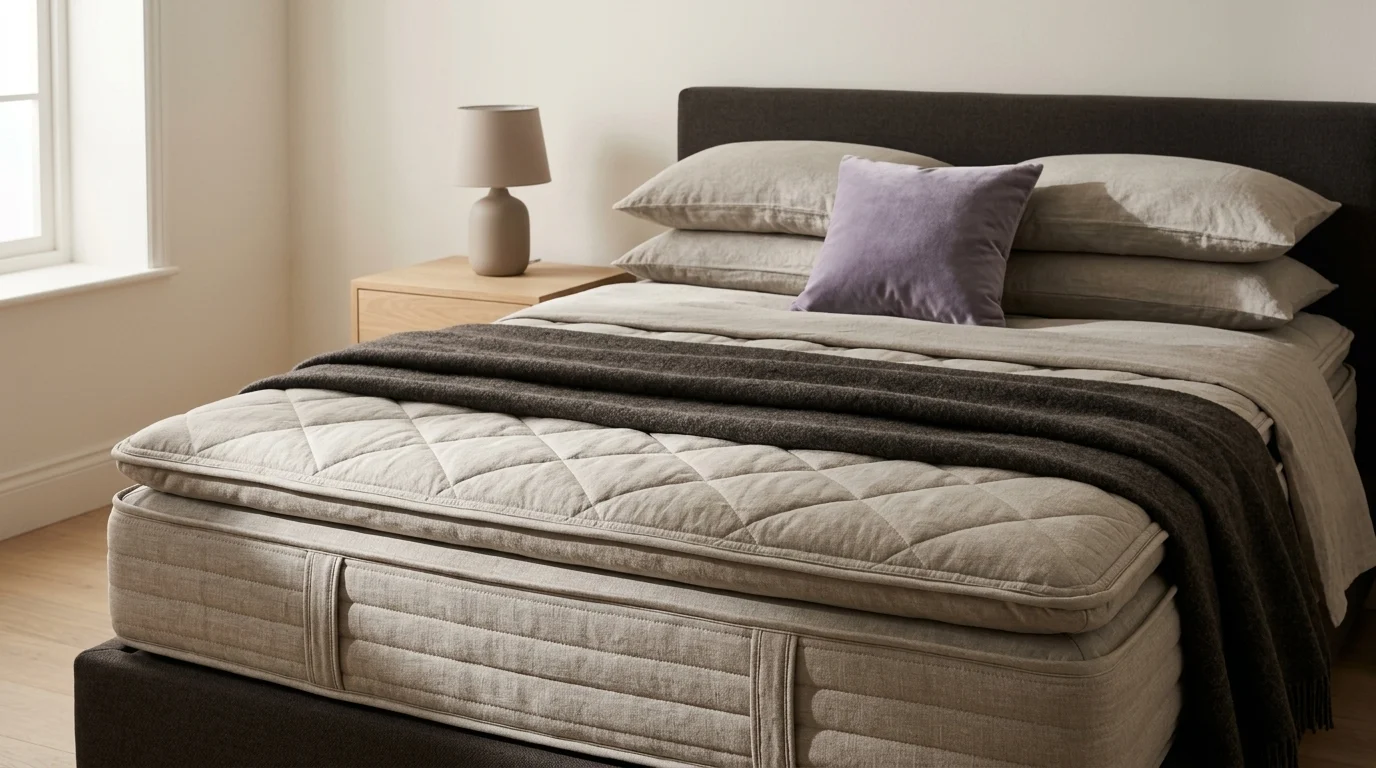
- Hand-tufting. Cords drawn through the mattress and secured at both faces, holding the fillings in place instead of relying on glue and quilting. It is labour-intensive and it is the main reason a traditional mattress holds its shape for decades rather than years.
- Multi-zone pocket springs, often in more than one layer. A micro-coil layer above a main spring unit responds to body contour at a finer scale than a single unit can.
- Better edges and better corners, usually from a stronger perimeter build rather than a foam rail.
- Service. Two-person delivery to the room, installation, and removal of the old mattress. At this price these should be included, not extras.
What it does not buy
Coil count past a point is a marketing number. More springs in the same area means thinner wire in each. Beyond a few thousand in a queen the added responsiveness is small and the figure is mostly there to be compared against a competitor's figure. Read the spring layout and wire gauge if the brand publishes them; ignore the headline count if it does not.
"Handmade" and "orthopaedic" are unregulated. Neither term has a defined meaning in Australia and neither has to be earned.
Thickness is not quality. A 40 cm mattress can be 15 cm of support and 25 cm of soft filling that compresses within two years. Depth of the
support layer is the number that matters.
What the mattresses on this list actually are
This is a mixed category rather than a single type, and the five ranked here do not compete with each other so much as offer different definitions of what a premium mattress is.
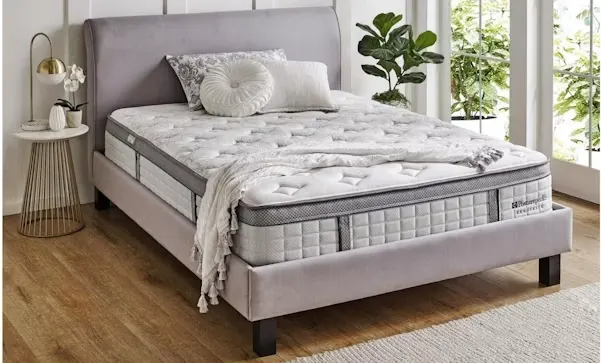
- The tall pocket-spring hybrids put their money into the spring system and the cover — multiple zones, a reinforced perimeter, and covers that unzip and go in a washing machine. The two on this list are 26 cm and 31 cm.
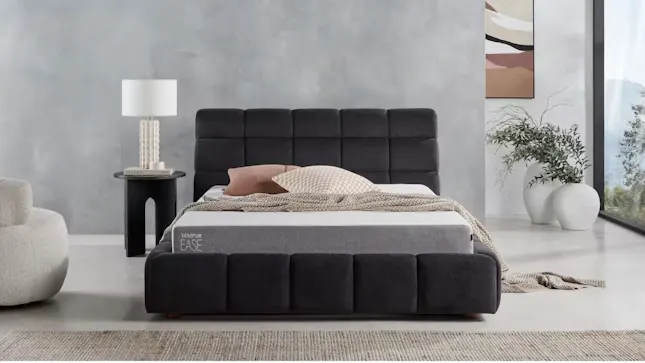
- The engineered-foam mattresses put it into a proprietary material and the processing behind it, rather than into springs. That buys deep, slow contouring and very good motion isolation; it costs airflow, which is why the cooling scores in that group are the lowest on this page.
- The traditional innerspring is the outlier and the dearest: 33 cm, four separate firmness levels sold as different products, edge reinforcement wrapping all four sides, and Australian manufacture. It is also sold through a single retail chain rather than direct, which changes how you shop for it.
One honest note about the scores on this page. Value is one of the ten criteria on this site, and it is the criterion that premium mattresses lose points on by definition — the most expensive mattress here carries the lowest value score on the whole site. That is not a criticism of how they are built. It is what happens when a mattress costs three to six times what a competent boxed hybrid costs. If price genuinely is not a constraint for you, read the support, comfort and features criteria and treat the value figure as noise.
The fine print should get better at this price, not worse
This is the most useful test in the category, because it is the one thing you can check before buying.
- Is the warranty pro-rata? A 25-year warranty that becomes pro-rata after year five means that from year six you are paying a rising share of the replacement cost. The headline number and the useful number are very different. Ask which years are full replacement.
- What is the sagging threshold? Warranties cover permanent indentation past a stated depth, measured with nothing on the bed. A generous-sounding warranty with a deep threshold is harder to claim on than a shorter one with a shallow threshold.
- Rotation requirements. Many premium mattresses must be rotated on a schedule, and some require flipping. Failing to do it can void the warranty — and on a heavy hand-tufted mattress this is a genuine two-person job every few months.
- Base requirements. Some warranties are only valid on a base the same brand sells. That turns the real price into mattress plus base.
- Trial length. A premium mattress should come with at least as long a trial as a boxed one. If it comes with less, ask why.
The trial question is sharper here than anywhere else
It is worth being blunt about this, because it is the single largest practical difference in the category. Some premium mattresses — particularly the ones sold through traditional retail — come with no home trial at all. Two of the mattresses on this site are in that position, and both of them sit in this category.
The logic offered is that you can lie on it in a showroom first. Ten minutes on a bed, fully dressed, in a bright room, next to a salesperson, is not equivalent to three weeks at home, and everyone involved knows it. What it means in practice is that on a mattress costing several thousand dollars, the risk of it not suiting you transfers entirely to you at the moment of purchase.
That does not make those mattresses bad. It does mean the decision has to be made differently: spend longer in the showroom, take your own pillow, lie in the position you actually sleep in for at least fifteen minutes per candidate, and ask in writing what happens if it turns out to be wrong. A comfort exchange offered by a retailer is not the same thing as a trial, and its conditions are worth reading before rather than after.
Buying in a showroom without being sold to
- Go with the specification, not the model name. Premium ranges are frequently renamed per retailer, so the same build appears under different names at different chains and cannot be price-compared by name. Ask what the spring system and layer construction are, and compare on that.
- Ignore the recommended retail price. In this category the RRP exists mainly to be discounted from. Compare against what the mattress actually sells for, at more than one retailer.
- Do not let the base be assumed into the deal. An ensemble base is often quoted as part of a package. Price the mattress alone as well, and check whether the warranty actually requires that base.
- Get the delivery inclusions in writing. Room-of-choice delivery, unpacking, packaging removal and old-mattress removal are commonly included at this price and commonly forgotten at the point of booking.
How to shop this category
Decide the firmness and construction you need first, using the same reasoning as any other mattress — how you sleep, your weight, your base. Then look at what the premium spend adds on top. Working in that order stops you buying a beautifully made mattress in the wrong specification, which is the expensive mistake this category invites.
When a premium mattress is the wrong call
There are three situations where the money is better spent elsewhere, and they are common enough to be worth naming.
When you do not yet know what firmness you want. Buy something reconfigurable and cheaper, learn what you actually like over a year, and buy the expensive one with that knowledge. Spending twice is still cheaper than spending a lot once on the wrong feel.
When the base is old. A premium mattress on a sagging base performs like the base, not like the mattress, and the warranty may not cover what happens next. Replace the base first and reassess.
When the bed is not slept in every night. Guest rooms and holiday houses do not accumulate the load that justifies a durability premium.
Common questions
Does a more expensive mattress last longer?
Often, but not because of the price. It lasts longer because of denser foam, better spring steel and tufting instead of glue — and a cheaper mattress with those things will also last. The price is a proxy, and proxies fail.
Is an Australian-made mattress better?
Place of manufacture tells you about supply chain and support rather than quality. What it does affect is practical: local manufacture usually means spare parts, warranty assessment and replacement are handled faster, which matters over a ten-year term.
Is a natural-fibre mattress worth the premium?
Wool and other natural fills genuinely manage heat and moisture better than synthetic wadding, so if you sleep hot it is a real benefit rather than a marketing one. They also need more maintenance — rotation, and in some cases flipping — and they are heavy.
Should I buy the matching base?
Only after checking whether the warranty requires it. If it does, the base is part of the price of the mattress and should be compared that way. If it does not, price it against any base that meets the slat and centre-rail requirements.