This page compares mattresses. It is not medical advice, and a mattress is not a treatment. If your back pain is persistent, severe, or new, talk to a health professional before you spend money on a bed.
Support and firmness are not the same thing
This is the single most useful distinction in the category, and almost every product page blurs it.
Firmness is how the surface feels when you first lie down. Support is whether the mattress holds your spine in roughly the same line it holds when you are standing. They are separate properties. A soft-feeling mattress with a strong support core can be very supportive. A firm mattress with a weak core can sag under the hips and be unsupportive while still feeling hard.
"Firm equals good for your back" is the most common bad assumption in mattress shopping. What you are looking for is alignment, not hardness.
What the evidence actually supports
The research on mattresses and back pain is genuinely mixed, and it does not point to one answer for everyone. Medium-firm surfaces come up most often in the studies that exist, but the effect sizes are modest and the trials are small. Anyone telling you there is a single best mattress for back pain is going beyond what the evidence shows.
Note also that "orthopaedic" is not a regulated term in Australia. Any manufacturer can print it on any mattress. It tells you nothing on its own — read the construction instead.
Which of the three problems do you have?
Before comparing mattresses, work out what the bed is actually doing to you. The three patterns point in different directions, and only two of them are a mattress problem at all.
- You wake stiff and it eases within half an hour of getting up. This is the pattern most associated with the sleep surface. Stiffness that clears with movement suggests the spine was held out of line overnight, or that you did not move enough because the surface made turning hard.
- Pain builds through the night and wakes you. Also worth taking to the mattress, but check the base first — a sagging slat base or an old ensemble produces exactly this and costs a fraction of a new mattress to fix.
- Pain is the same when you wake as when you go to bed, or worse during the day. This is not a mattress signal. A new bed is unlikely to change it, and the money is better spent on getting the cause looked at.
If you are in the first two groups, one cheap diagnostic is worth running before you buy anything: sleep somewhere else for a few nights — a spare room, a hotel, a relative's house — and see whether the pattern changes. If it does not, the bed is probably not the variable.
How you sleep changes what you need
- Back sleepers generally need the lumbar curve filled rather than flattened. Too soft and the hips sink below the shoulders; too firm and the lower back is left unsupported in the gap.
- Side sleepers need the shoulder and hip to sink far enough that the spine stays level. There is more on this on the side sleepers page.
- Stomach sleepers usually need a firmer surface, because the hips sinking is what puts the lower back into extension.
- Combination sleepers need a surface responsive enough to change position without having to climb out of a hollow.
Body weight changes the firmness rating
A firmness label describes the mattress, not the experience. The same "medium" mattress sinks further under a heavier person and behaves as a softer bed; under a lighter person it behaves as a firmer one. When comparing two brands, compare construction and layer depths rather than the word on the label.
Zoning
Zoned mattresses vary the support across the length of the bed — firmer under the hips where most of the load sits, softer at the shoulders. It is a genuine construction difference rather than a finish, and it is worth looking for in this category specifically. Several of the mattresses ranked on this page use five or seven zones rather than a uniform core.
What the mattresses on this list have in common
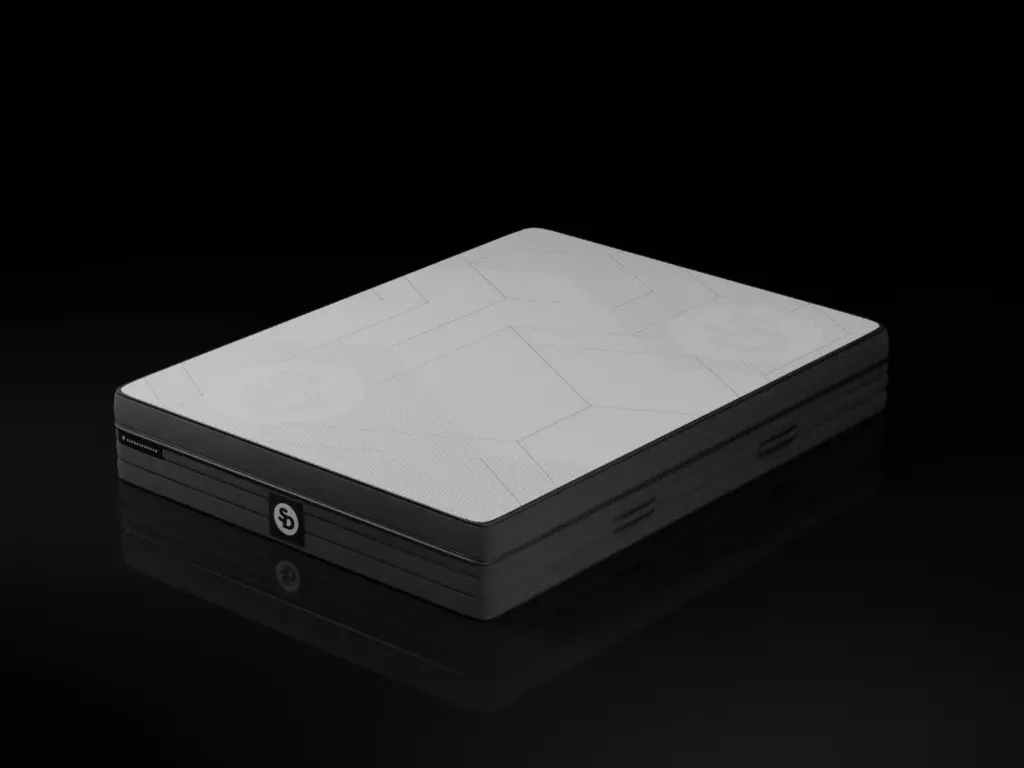
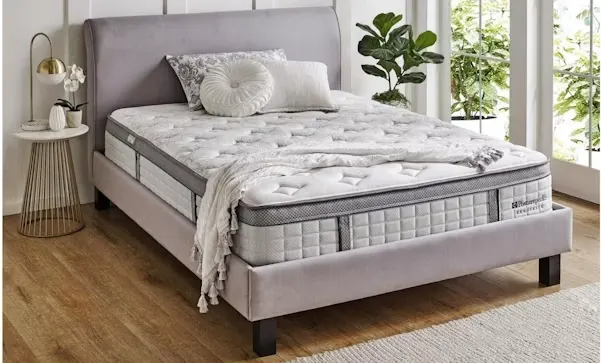
Three of the five ranked here are pocket-spring hybrids and two are all-foam. That split is worth understanding rather than treating as a ranking artefact.
A hybrid puts a wrapped spring unit under the comfort layers. Springs push back against load rather than compressing under it, so the support core is less likely to develop a hollow under the hips, and the mattress usually runs cooler because air moves through the spring layer. That is why hybrids are well represented in this category.
All-foam mattresses contour more closely, which suits people whose problem is pressure rather than alignment, and they isolate movement better — relevant if a partner turning over is part of why you wake. What they need in exchange is a genuinely dense support layer underneath, because a soft foam core is the classic cause of the sagging-under-the-hips problem.
What every mattress on this list offers is a firmness at medium-firm or above, and most of them can be reconfigured after delivery rather than being fixed at one feel. In a category where the right firmness is individual and the evidence does not point to a single answer, being able to change your mind without returning the mattress is worth more than a small difference in score.
The parts of the fine print that matter here
- Trial length and how it works. Fit is individual, so the trial is the only real test. Check whether there is a minimum break-in period before you can return, who pays return freight, and whether your postcode is covered.
- Sagging threshold in the warranty. Most warranties only cover permanent indentation past a stated depth, measured unweighted. That figure is the one that decides whether a claim succeeds.
- Base requirements. Many warranties require a base with slats no more than a set distance apart, or a centre rail. Using the wrong base can void the cover.
- Edge support is worth more than usual if you sit on the side of the bed to get up.
The things that are not the mattress
Each of these is cheaper than a mattress and each of them produces symptoms people blame on the mattress.
- The base. A slat base with a broken or bowed slat, or an old ensemble that has softened in the middle, makes any mattress on top of it sag. Take the mattress off and look along the base at eye level. If it dips, replacing it is the first fix, not the last.
- The pillow. Neck alignment and lower back load are connected. A pillow that is too tall for your sleeping position holds the neck bent all night, and the compensation runs down the spine.
- Age of the mattress. Foam and springs both lose height gradually enough that you never notice the day it happened. If the mattress has a visible body impression while unweighted, the comparison you should be making is against a new mattress of the same model, not against a different brand.
- What you do the rest of the day. Eight hours in bed is a third of the day. The other two thirds — sitting, lifting, movement, conditioning — are usually the larger variable, which is again a reason to talk to a health professional rather than a retailer.
Use the break-in period properly
A new mattress rarely feels right on night one, and in this category that matters more than usual. Two things are happening at once: the mattress is settling, and your body is unlearning the shape of the old bed. Most brands ask for two to four weeks before judging, and many trials have a minimum period before a return is allowed for exactly that reason.
Give it the full period even if the first week is uncomfortable — an adjustment ache in week one is common and usually resolves. What is not normal is pain that is clearly worse than your old bed and still worse at the end of the trial period. That is the trial doing its job, and it is the point at which you should use it.
Set expectations honestly
A mattress that matches how you sleep can make mornings easier. It is not a treatment for an underlying condition, and no mattress sold in Australia is approved as one. If pain persists after a genuine adjustment period, that is a reason to see a health professional, not a reason to buy a different mattress.
Common questions
Is a firm mattress better for back pain?
Not reliably. The studies that exist point more often at medium-firm than at firm, and the effect is modest. A firm mattress that leaves a gap under the lower back is worse for alignment than a medium one that fills it.
Does a mattress topper fix a bad mattress?
A topper changes the surface, not the support core. If your mattress is too firm at the surface, a topper can genuinely help and costs far less than replacing the bed. If the core has sagged, a topper sits in the same hollow and changes nothing.
How long should a mattress last before it starts causing problems?
There is no fixed number, and it depends on build quality and load. What is more useful than an age is a test: strip the bed, look along the surface at eye level, and see whether there is a visible impression with nothing on it. If there is, that is the answer regardless of how old it is.
Can a mattress make back pain worse?
A mattress that holds your spine out of line, or that has softened unevenly, can certainly leave you stiffer than you would otherwise be. That is a different claim from a mattress causing a back condition, which is not something a mattress specification can tell you and not something this page is in a position to assess.