How to clean a mattress: stains, smells and dust mites

The short answer: Vacuum the mattress every few months, spot-clean stains with as little liquid as possible, and let it dry completely. Use cold water on blood, an enzyme cleaner on urine and sweat, and bicarbonate of soda to absorb smells. Never soak a mattress, steam-clean foam, or mix cleaning products. Check the care label first — especially for a removable cover — and keep a protector on afterwards, because preventing a stain is far easier than removing one.
Check the label first
Before you clean anything, read the care instructions on the law tag or the brand’s website.
- Removable cover? Some covers can go in the washing machine, some must be hand-washed or spot-cleaned only, and some should not be removed at all. Washing a cover that is not meant to be washed can shrink it so it no longer fits.
- Cleaning products. Some warranties exclude damage from harsh chemicals. A mild detergent is the safe default.
- Foam can’t be washed. The foam inside a mattress should never be soaked or put through a washing machine. It holds water for a long time, and damp foam is an invitation to mould.
A simple routine
Every few months, and whenever you change the protector:
- Strip the bed and wash the sheets and protector.
- Vacuum the mattress with the upholstery attachment, working slowly across the top and sides and along the seams, where dust and skin cells collect.
- Air it. Leave it uncovered for a few hours with a window open.
- Rotate it head to foot if the maker recommends it.
Spot-cleaning basics
The same rules apply to almost every stain:
- Act quickly. Fresh stains come out far more easily.
- Blot, don’t rub. Rubbing spreads a stain and pushes it deeper.
- Use as little liquid as possible. A damp cloth, not a wet one. Apply cleaner to the cloth rather than straight onto the mattress.
- Work from the outside in, so the stain does not spread.
- Dry it thoroughly. Use a fan and open windows. Avoid putting a hair dryer on high heat close to the cover.
- Test first. Try any cleaner on a hidden spot to make sure it does not discolour the fabric.
Stain by stain
| Stain | What to use | Notes |
|---|---|---|
| Blood | Cold water, then a little mild detergent | Never hot water — heat sets blood. Hydrogen peroxide can lift what is left, but it can bleach fabric, so test it first |
| Urine | Blot, then an enzyme cleaner | Enzyme cleaners break down the compounds that cause the smell. Dry thoroughly, then use bicarbonate of soda for any odour |
| Sweat and yellowing | Enzyme cleaner or a mild detergent solution | Old yellow marks may lighten rather than disappear |
| Food and drink | Blot, then a mild detergent solution | Lift off any solids first |
| Vomit | Remove solids, then an enzyme cleaner | Treat the smell with bicarbonate of soda once dry |
Dealing with smells
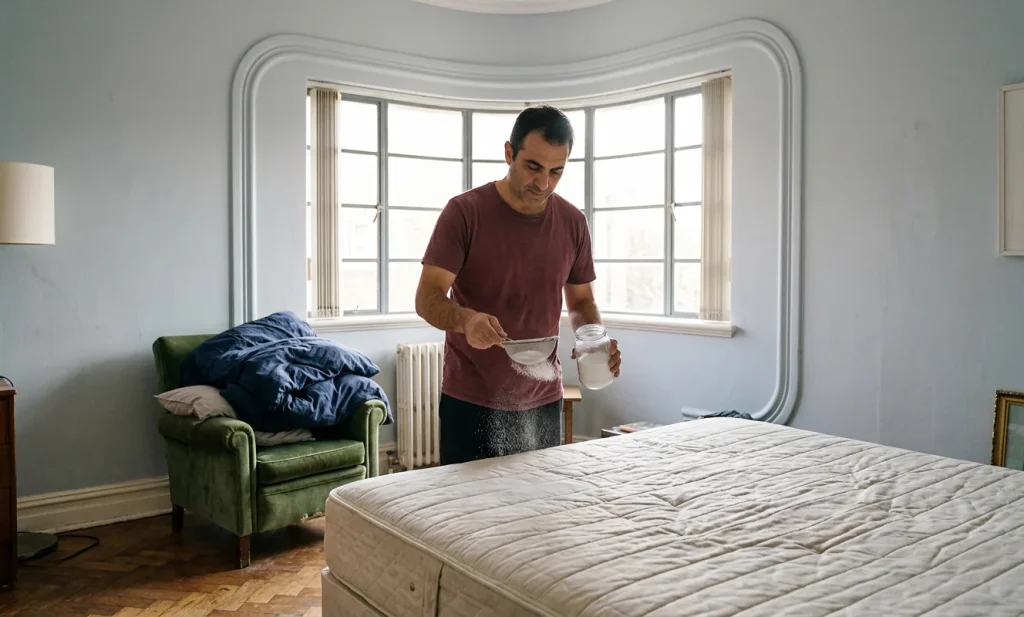
Sprinkle a generous layer of bicarbonate of soda over the mattress, leave it for several hours — longer if you can — and vacuum it off thoroughly. It absorbs moisture and odour. Airing the mattress with windows open and a fan running helps as well. For a smell that comes from deep inside, such as an old urine stain that soaked through, cleaning the surface may not be enough.
Dust mites
Dust mites live in every mattress, pillow and quilt. They feed on shed skin, and their droppings are a common allergy and asthma trigger. You cannot get rid of them by cleaning the mattress, but you can cut the allergen down. The Australasian Society of Clinical Immunology and Allergy (ASCIA) recommends:
- Washing sheets, pillowcases and other bedding weekly in water hotter than 60°C.
- Hot tumble drying for about ten minutes after washed items are dry, which also kills mites, if you cannot wash hot.
- Mite-resistant covers for the mattress, pillows and quilt.
- If hot washing is not possible, products made to kill mites in a cold wash, such as those containing eucalyptus or tea tree oil.
Vacuuming removes surface allergen but does not reach mites deep inside a mattress. A protector or full encasement is what keeps the allergen from building up — see our protector guide.
What not to do
- Don’t soak the mattress or pour liquid onto it.
- Don’t steam-clean foam. Heat and moisture together can damage foam and leave it damp inside.
- Don’t use bleach on the cover unless the care label allows it.
- Never mix cleaning products. Bleach mixed with vinegar or with ammonia releases toxic gases.
- Don’t put bedding back on a damp mattress. Wait until it is completely dry.
When cleaning isn’t enough
Some damage can’t be undone at home: mould inside the mattress, a large spill that has soaked deep into the foam, or a smell that keeps returning. A specialist mattress cleaning service can sometimes help. Otherwise, it may be time for a new one — these signs will help you decide.
Common questions
How often should I clean my mattress?
Vacuum and air it every few months, and spot-clean stains as they happen. Wash the protector and sheets far more often.
Can I wash my mattress cover in the machine?
Only if the care label says so. Some covers shrink or lose their shape and will no longer fit.
Does bicarbonate of soda really work?
It absorbs moisture and odours from the surface. It won’t remove stains on its own, and it can’t reach smells deep in the foam.
How do I get an old urine stain out?
Use an enzyme cleaner and let it work for the time on the label, blotting rather than soaking. Older stains may lighten rather than disappear completely.
Will cleaning my mattress void the warranty?
Gentle spot-cleaning with mild products won’t. Soaking it, steam-cleaning foam or using harsh chemicals could.
Join the discussion
Comments are closed.