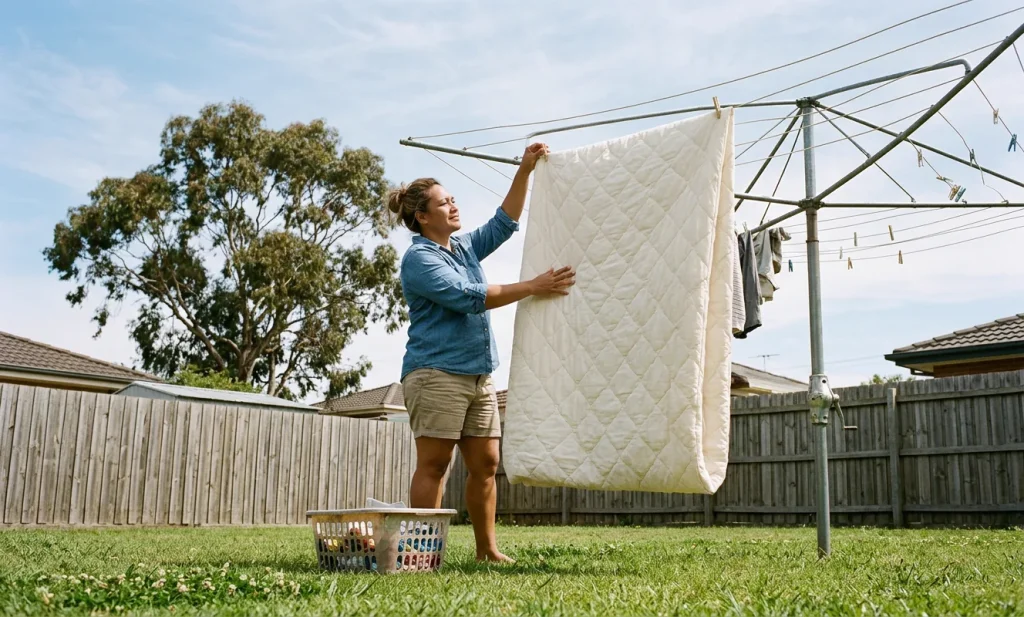
Mattress protectors: do you need one, and which type?

The short answer: Yes — for almost everyone. A protector keeps sweat, spills, skin cells and dust mite allergen out of the mattress, and it keeps the mattress clean enough to claim on its warranty, because most warranties exclude mattresses that are stained or soiled. For most people a fitted protector with a breathable waterproof membrane is the right choice. Choose between types on heat, noise and how easily it washes, and make sure its pocket depth is deeper than your mattress.
What a protector does, and what it does not
A mattress spends a third of its life under a warm, slightly damp body. Over a year, that adds up to a lot of sweat and shed skin, which is what dust mites feed on. A protector is a washable barrier between you and the mattress: you wash the protector, so you never have to try to wash the mattress.
It is worth being clear about what a protector is not:
- It is not a comfort layer. A thin protector barely changes how a mattress feels. If a mattress is too firm or too soft, a protector will not fix it.
- It is not a repair. It will not hide a dip or a sag, and it will not make a worn-out mattress supportive again.
- It is not a sheet. It goes on under the fitted sheet, and both should be washed regularly.
Why warranties make it close to essential
Most mattress warranties cover manufacturing defects — sagging beyond a stated depth, broken springs, seams coming apart — and most exclude damage from stains, liquids and poor hygiene. Some brands will not inspect a stained mattress at all, even for an unrelated defect. Sleep trial returns can carry similar conditions about the mattress being clean.
Read your own warranty for the exact wording; our warranty guide explains the usual exclusions. The cheapest way to keep every option open is a protector on from the first night.
The main types
| Type | Good at | Trade-offs |
|---|---|---|
| Waterproof with a breathable membrane | Stops liquids reaching the mattress; most versatile | Can feel slightly warmer; cheaper membranes can rustle |
| Cotton (terry or quilted) | Breathable and soft; absorbs sweat | Not waterproof unless it has a membrane underneath |
| Wool | Absorbs moisture and helps regulate temperature | Usually not waterproof; often needs gentle washing |
| Bamboo-derived fabric | Soft, cool to the touch | The fabric is usually viscose made from bamboo pulp; check for a membrane if you need waterproofing |
The membrane is the part that matters most in a waterproof protector. A thin polyurethane film lets water vapour through while stopping liquid, so it sleeps far cooler than older vinyl-backed protectors, which trap heat and crackle. If a product does not say what the waterproof layer is, ask.
“Bamboo” protectors deserve a note. The fabric sold under that name is almost always viscose or rayon made from bamboo pulp, so it behaves like viscose — soft and smooth — rather than like the plant. It is a perfectly good fabric; just compare it on what it is.
Fitted protector or full encasement?
A fitted protector covers the top and sides like a fitted sheet. It is easy to take off for washing and is what most people need.
A full encasement zips around the whole mattress. It is harder to put on and take off, but it seals all six sides. That is useful if you have a dust mite allergy — the Australasian Society of Clinical Immunology and Allergy (ASCIA) lists mite-resistant covers for mattresses, pillows and quilts among its recommendations — or if you want a barrier on every side.
Getting the fit right
Protectors are sold by mattress size and by pocket depth, the height of the skirt that wraps the sides. The pocket needs to be deeper than your mattress, with a little to spare. A protector that only just reaches will pull the corners in, compress the edges of the mattress and creep off during the night. If you have a tall mattress, look for an extra-deep pocket. Our size guide explains why mattress height matters for bedding.
If you sleep hot
Heat is the most common complaint about protectors, and it almost always comes from the waterproof layer. To keep it to a minimum:
- Choose a breathable polyurethane membrane rather than vinyl or PVC.
- Look for a cotton or wool top surface rather than polyester.
- Avoid heavily quilted protectors, which add a layer of insulation.
See our guide to sleeping hot for the other changes that make a difference.
Washing and care
Wash a new protector before first use if the label says to, then every few weeks and after any spill. Follow the care label closely: many waterproof membranes are damaged by bleach, ironing or a hot tumble dryer, and a cracked membrane stops being waterproof.
If you are washing hot to control dust mites, ASCIA’s advice is to wash bedding weekly in water hotter than 60°C. Not every protector will take that, so check the label before you buy if allergies are the reason you want one. Having two protectors means there is always a clean one ready while the other dries.
For stains that got through anyway, see how to clean a mattress.
Common questions
Does a mattress protector void a sleep trial?
No — most brands recommend one. Some trials require the mattress to be returned clean, which a protector helps with.
Will a protector change how my mattress feels?
A thin fitted protector makes very little difference. Thick, quilted protectors can soften the surface slightly and add some warmth.
How often should I replace a protector?
When the membrane cracks, the elastic goes, or it stops being waterproof. Check it after washing by looking for stiff or flaking patches.
Do I need a protector on a new mattress with a washable cover?
It is still worth having. A washable cover helps with surface marks, but liquid can soak through it into the foam underneath before you notice.
Are waterproof protectors noisy?
Older vinyl-backed ones were. Most modern protectors use a thin polyurethane membrane under a fabric top, which is close to silent.
Join the discussion
Comments are closed.