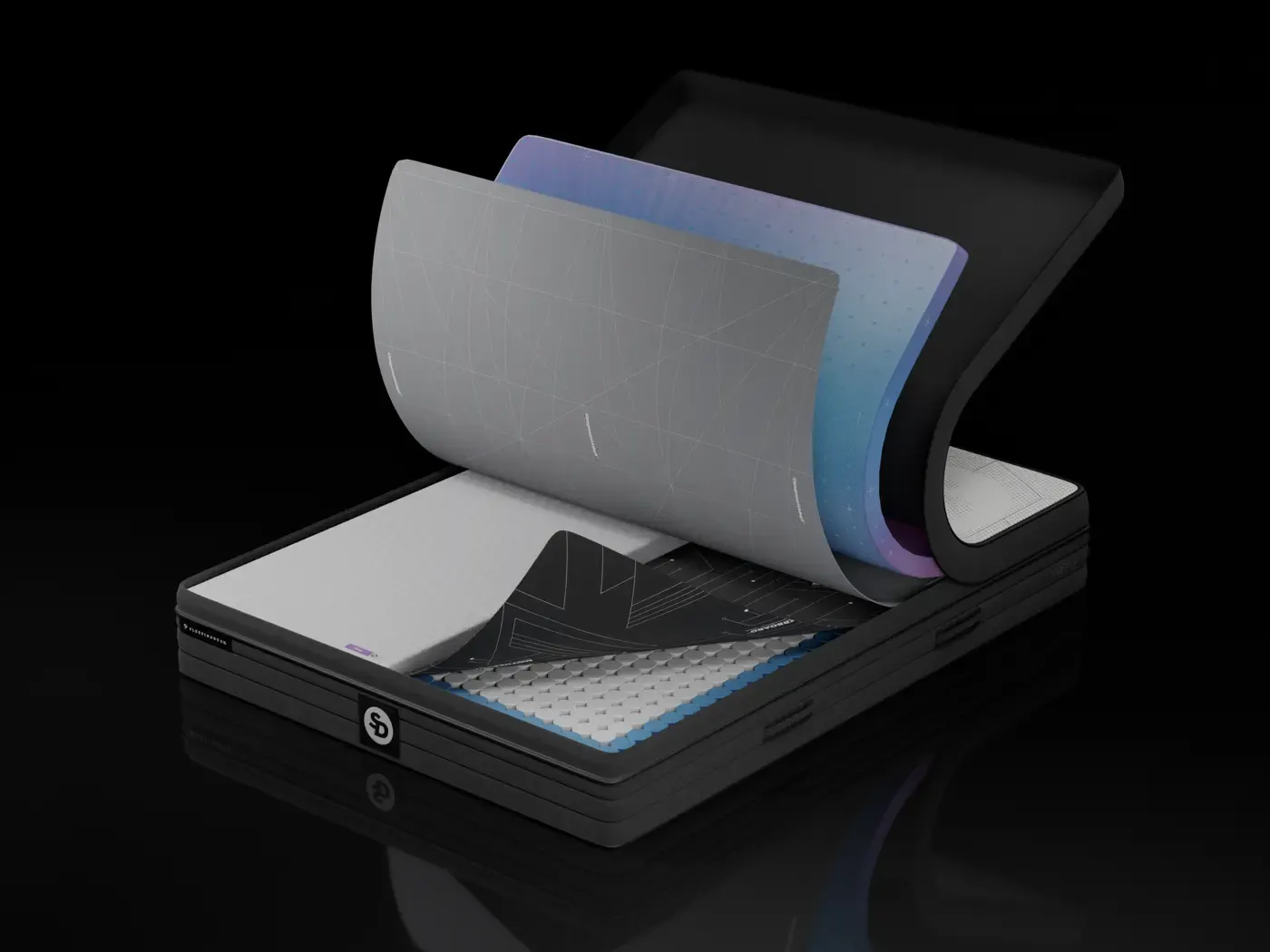
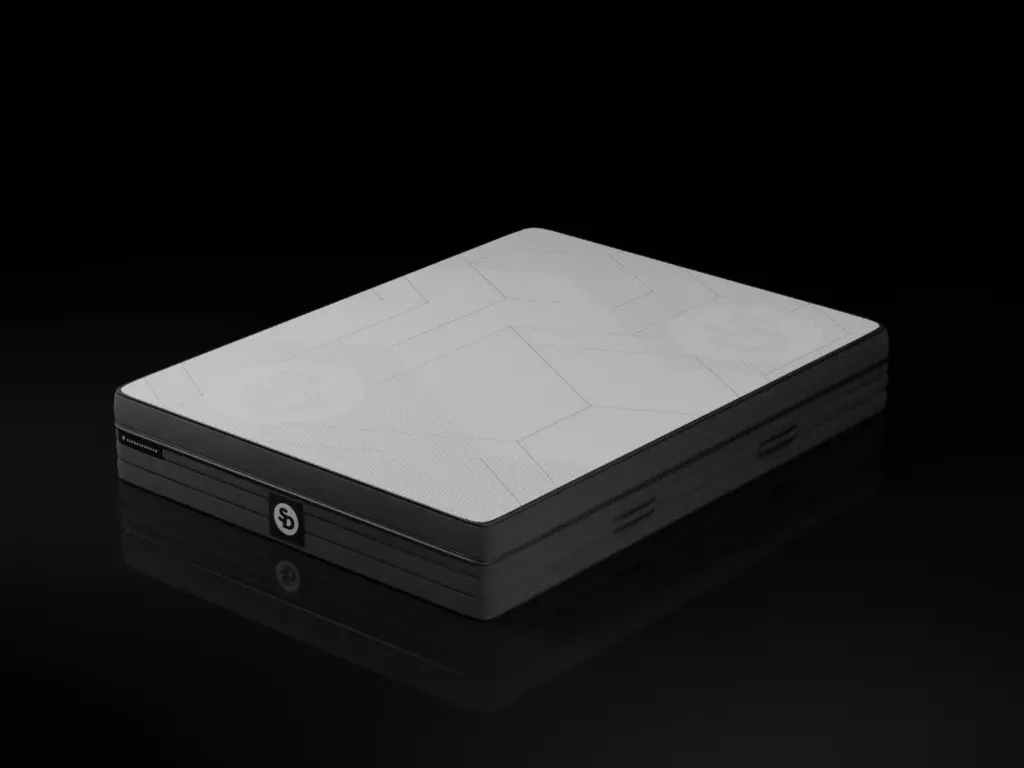
The Mach II is a hybrid built to come apart. Twice tempered steel pocket springs carry the load, zoned, with a perimeter row of higher-strength coils so the surface holds when you sit on the edge. Above them sit two layers of high-density AirGrown polyurethane — not memory foam, a comparison Sleeping Duck draws itself, on the grounds that it does not hold a body impression. Over that goes the BreatheTech cover, a knitted bamboo yarn that unzips and machine washes. It stands 31 cm, a deep profile that needs deep-pocket fitted sheets.
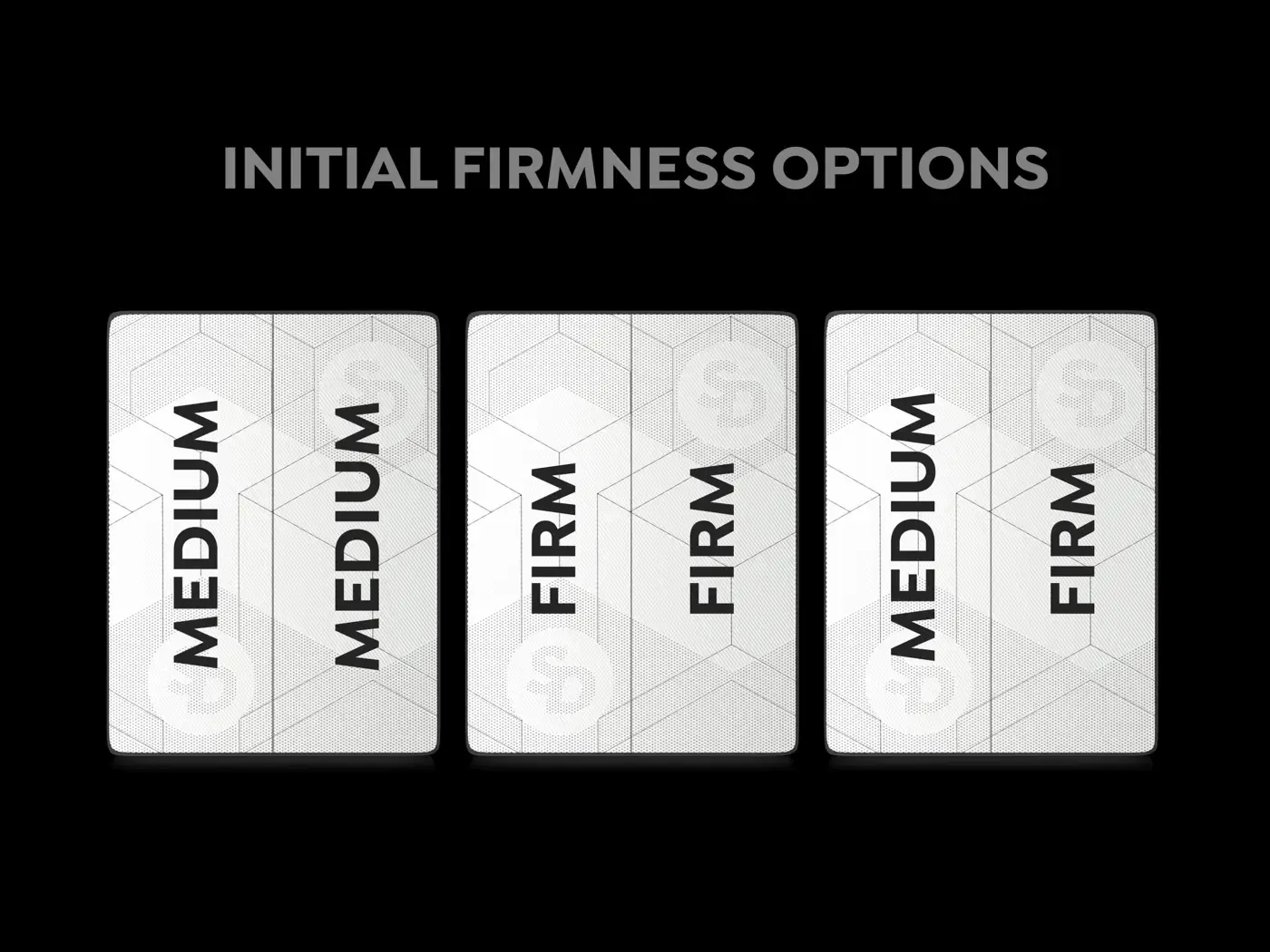
What separates it is that the firmness is not settled at the factory. You buy it medium, firm, or half-half — a different feel on each side — and a half-half queen costs the same $1,649 as either single-firmness build. Choose wrong and you swap the foam pad rather than the mattress: pads come in soft, medium, firm and extra firm, arrive by post, and swaps are free and unlimited across the 100 nights. Cover and foams are replaceable on their own, so one worn part does not mean a new bed.
The price and the fine print are the arguments against it. A queen is $1,649, $290 more than Emma and $650 more than Koala, and the 100-night guarantee matches Ecosa while running shorter than Newentor, Koala, Origin, Onebed and Emma. The warranty also carries an unusually long list of conditions: a sprung or adjustable base voids it outright, as do slats more than 12 cm apart, there is a 140 kg limit per sleeper, and only sagging deeper than 30 mm counts as a defect.